


Historical Sites of Kandahar Province
Qandahar Fort (Ahmadshahi Fort)
Ahmadshahi Fort, also known as Qandahar Fort, is one of the most prominent historical structures in Kandahar. Built in the 18th century during the foundation of modern Afghanistan by Ahmad Shah Durrani, the fort occupies a strategic location in the city center.
Constructed from mud bricks and stone, the fort features tall watchtowers, thick defensive walls, and strong gates, all designed to withstand external attacks. Beyond its military function, Ahmadshahi Fort symbolizes Ahmad Shah Durrani’s political authority. Despite the passage of time and damage, the fort remains one of Afghanistan’s key national heritage landmarks.

Shah Tahmasb School
The Shah Tahmasb School is a rare example of Safavid architecture in Afghanistan, dating to the reign of Shah Tahmasb I (16th century CE). Historically, it served as a religious school and educational center.
Architectural highlights include stucco decorations, tiled iwans with geometric patterns, and a decorated dome. While historical records are limited, the building is culturally significant as a symbol of Safavid architectural and intellectual influence in southern Afghanistan. Today, it remains an important site for study and cultural preservation, though it requires careful restoration.

Tomb of Shah Ali Khan
The Tomb of Shah Ali Khan, located on the outskirts of Kandahar, is an important historical mausoleum. Shah Ali Khan was a regional governor or commander during the post-Ahmad Shah Durrani period, influential in local administration.
The tomb is built in Islamic architectural style, featuring a central dome, decorative arches, and inscribed walls. It serves both as a place of pilgrimage and as a fine example of Islamic funerary art in southern Afghanistan.
Grand Mosque of Kandahar (Juma Mosque)
The Grand Mosque of Kandahar, or Juma Mosque, is one of the city’s most significant religious sites. Its origins likely date back to the early Islamic periods, though the present structure was rebuilt during the Timurid or Durrani era.
The mosque features a spiritual and simple architectural style, with short domes, a decorated mihrab, and a spacious courtyard. It remains active today, hosting Friday prayers, religious ceremonies, and community gatherings.
Gardens of Kandahar (Gulzar and Baba Wali Gardens)
Kandahar has historically been renowned for its beautiful gardens, including Gulzar Garden and Baba Wali Garden. Developed during the Timurid and Safavid periods, these gardens showcase traditional Afghan-Iranian design, with pools, water channels, fruit trees, and colorful flowers.
The gardens played an important role in urban culture, serving as recreation areas, venues for Nowruz celebrations, and social gatherings. Some of these gardens survive today, though parts have been damaged due to neglect or war.

Mundigak Hill
Mundigak Hill, located 55 kilometers northwest of Kandahar, is one of Afghanistan’s most significant archaeological sites. Dating back to the Bronze Age, it served as a gateway between the pre-Elamite civilizations of the Iranian Plateau and the Indus Valley civilization.
With a history of over 3,000 years, Mundigak Hill has yielded a wealth of artifacts, providing valuable insights into the region’s ancient culture, trade, and urban development.

Chihil Zina Arch (Forty Steps Arch)
Chihil Zina, located west of Kandahar atop Sar Pozeh Mountain, is a historical structure from the Babur era in Afghanistan.
The stone arch, known as “Forty Steps,” has 44 steps leading to a spacious area on top of the mountain. It is considered one of the important architectural and historical monuments of the Mughal period and remains a popular historical tourist attraction in Kandahar.

Narenj Palace
Narenj Palace, situated in Old Kandahar, dates back to the era of Alexander the Great and the Greeks. This palace is a prominent archaeological site, reflecting ancient Greek architectural influence in Afghanistan.
It is recognized as one of the legacies of the Alexandrian period in Khorasan (Greater Afghanistan) and holds great significance in the historical record of the region.
Ain-o-Mina Mountain
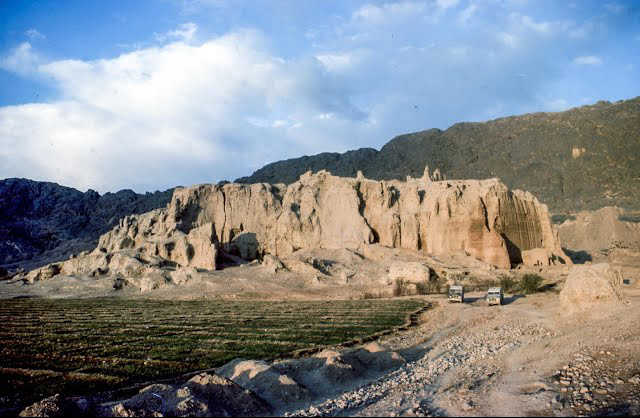
Ain-o-Mina Mountain, located in Kandahar province, is known for its natural and historical importance.
Nestled among high mountains with fertile valleys, agricultural lands, and fruit trees, the area has been home to thousands of families throughout history. It is also considered a part of Kandahar’s cultural and historical identity, representing the connection between nature, settlement, and heritage.
Kherqa Sharif (Sacred Cloak Shrine)
Kherqa Sharif, located in Kandahar city, is a religious and historical site. The sacred cloak (Kherqa) was brought to Kandahar in 1182 AH and has since remained one of the most important religious symbols of the region.
The shrine is significant not only for its spiritual value but also for its historical importance, representing an integral part of Islamic heritage in Afghanistan.




لا تعليق